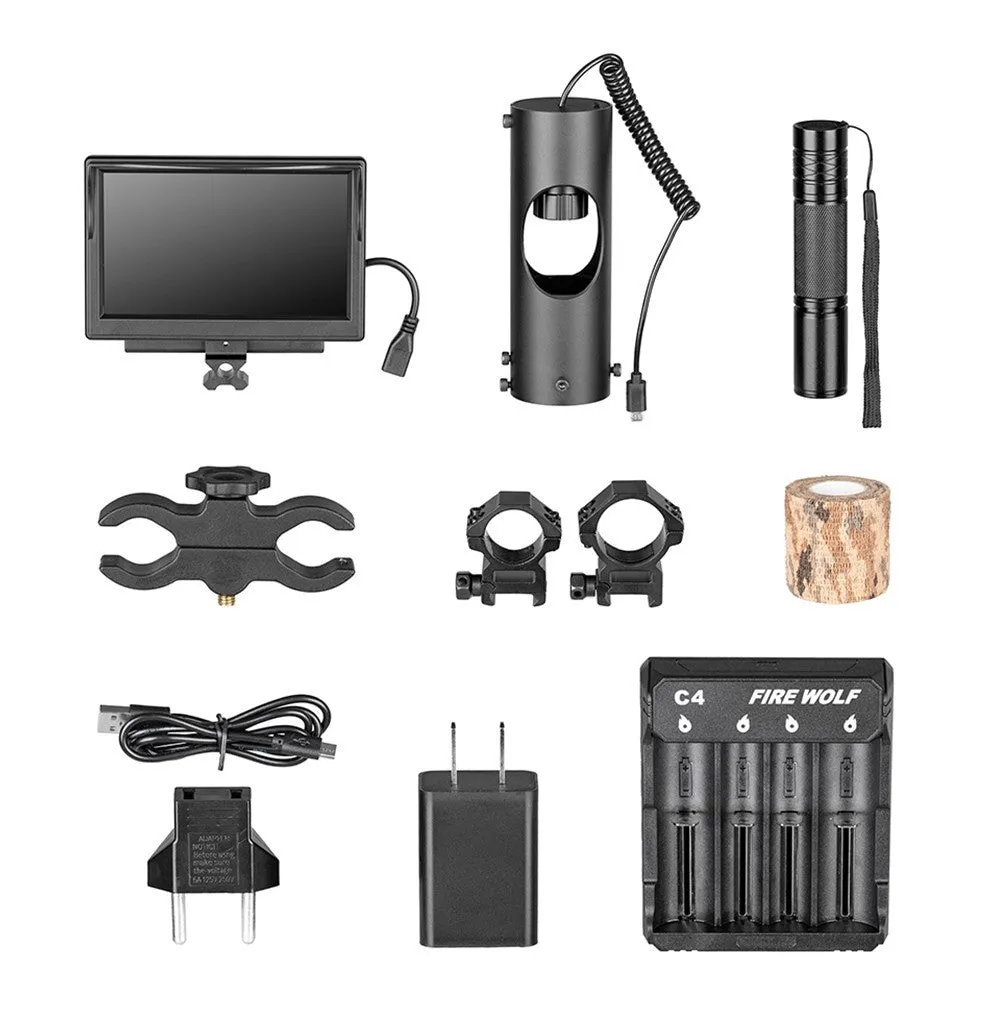
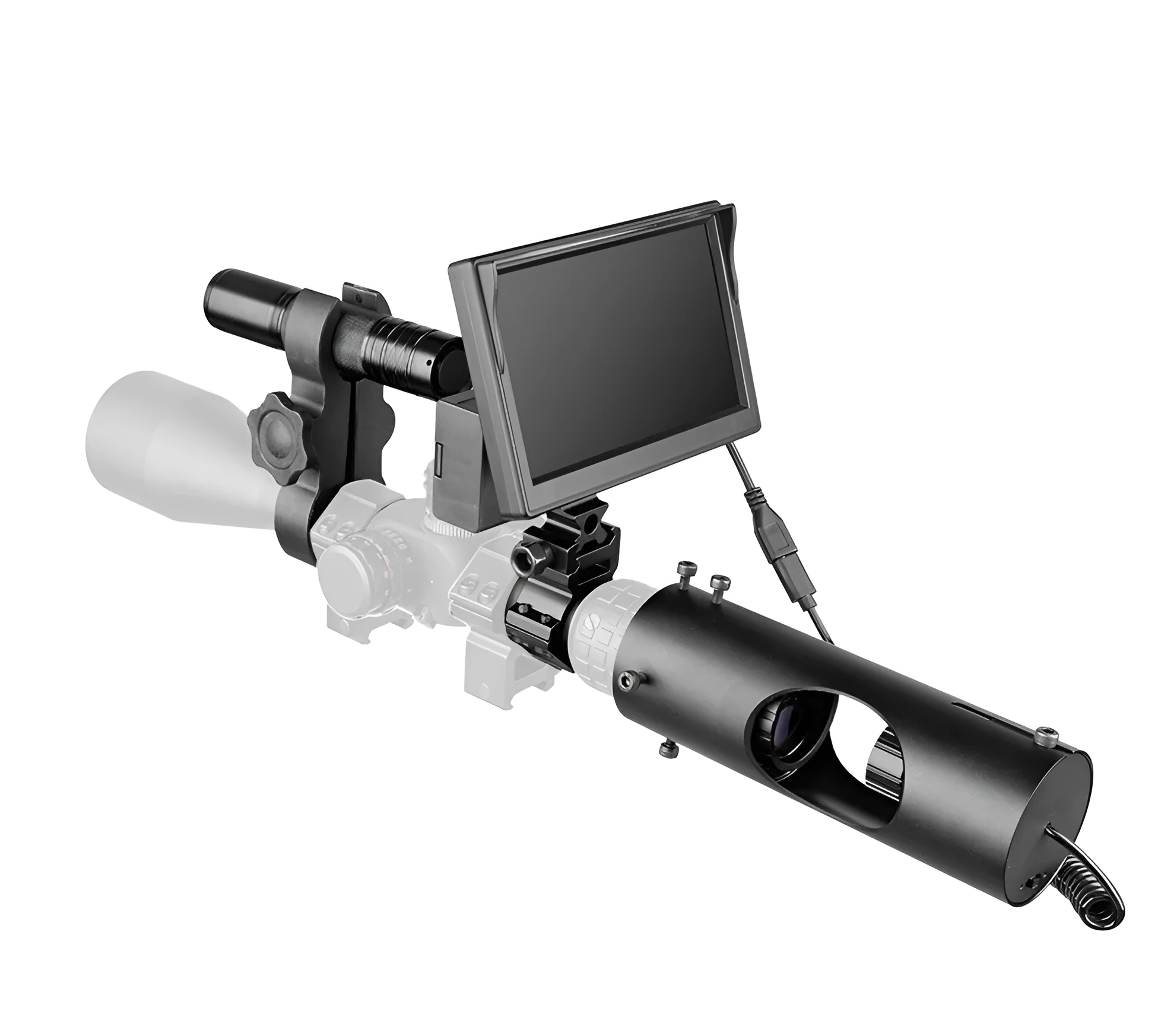
Digital low-light night vision goggles featuring a 5-inch LCD display and separate laser infrared transmitter for effective viewing up to 200 metres in black colour, designed for enhanced night vision capabilities in challenging light conditions.


Digital low-light night vision goggles featuring a 5-inch LCD display and separate laser infrared transmitter for effective viewing up to 200 metres in black colour, designed for enhanced night vision capabilities in challenging light conditions.
Digital Low-Light Night Vision Goggles with 5-Inch LCD Screen and 200-Metre Range
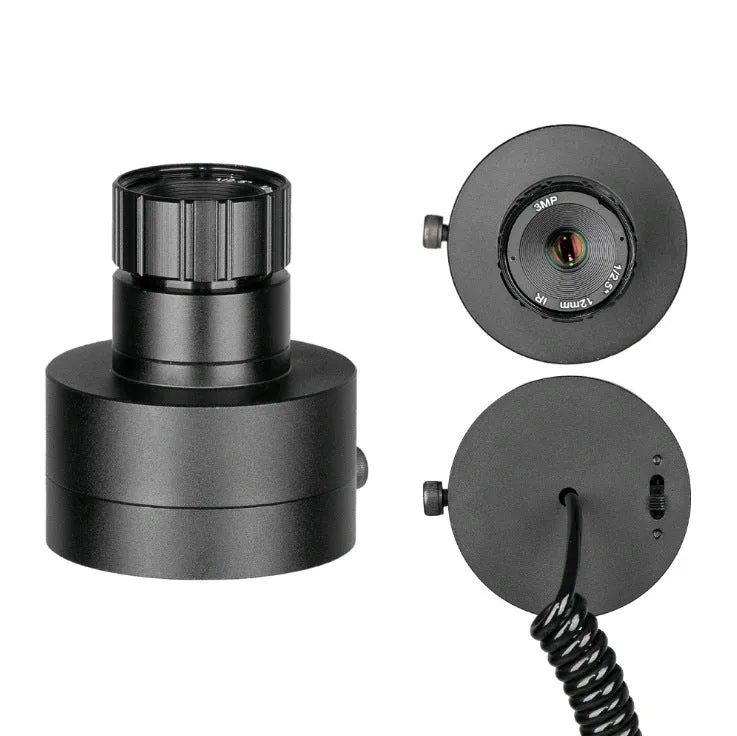
Navigating, observing, or performing tasks in near-total darkness presents a significant challenge where standard vision fails. These digital low-light night vision goggles are engineered to bridge that gap, providing a practical electronic vision enhancement solution. Unlike traditional image-intensifier tube devices, this model uses a digital CCD imaging sensor coupled with an active infrared illumination system. The core function is to capture available ambient light, amplify it electronically, and project a clear, real-time image onto a built-in 5-inch LCD display. This setup allows for effective viewing at distances up to 200 metres, offering users a detailed view of their surroundings in conditions where the human eye would see very little. The device is presented in a black finish and represents a specific category of night vision technology focused on light amplification rather than thermal detection.
Features and Construction
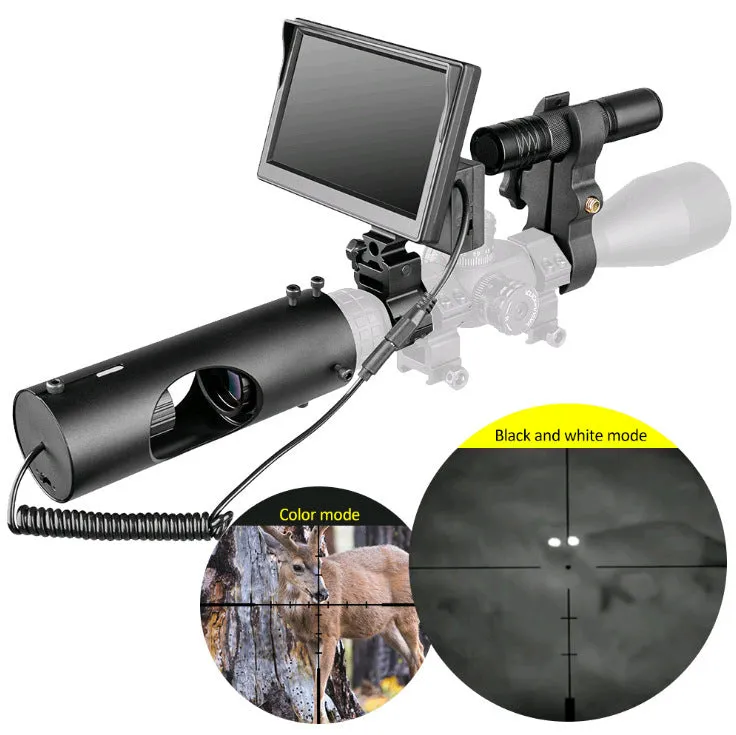
The construction of these goggles centres on a digital imaging pathway, beginning with light collection and ending with screen display. Key components work in sequence to convert low-light scenes into a viewable image on the integrated screen. This design prioritises a straightforward user interface and a self-contained viewing experience without the need for external monitors or complex setup procedures.
Material and Build
The build incorporates an objective lens with a diameter ranging from 35 to 45 mm, constructed from materials suitable for transmitting visible and infrared light to the internal sensor. The housing encloses the CCD HD imaging sensor, processing electronics, and the 5-inch LCD panel. A distinctive feature is the separate, or independent, infrared transmitter. This is a dedicated component that emits a beam of infrared light invisible to the naked eye but detectable by the device's sensor, actively illuminating dark scenes to improve image clarity. The non-thermal imaging specification confirms the device operates on the principle of light amplification, making it distinct from thermal cameras that detect heat radiation.
Size and Practical Fit
The primary stated dimension is the 5-inch LCD screen, which dictates the physical size of the viewing unit. This screen size offers a substantial display area for reviewing the captured scene, likely making the device handheld or helmet-mountable rather than a compact monocular. The 35-45 mm objective lens size suggests a housing proportionate to accommodate that lens diameter. The effective viewing distance of 200 metres provides a key performance parameter, indicating the range at which the system can deliver a usefully detailed image under its specified low-light operating conditions.
Uses and Placement
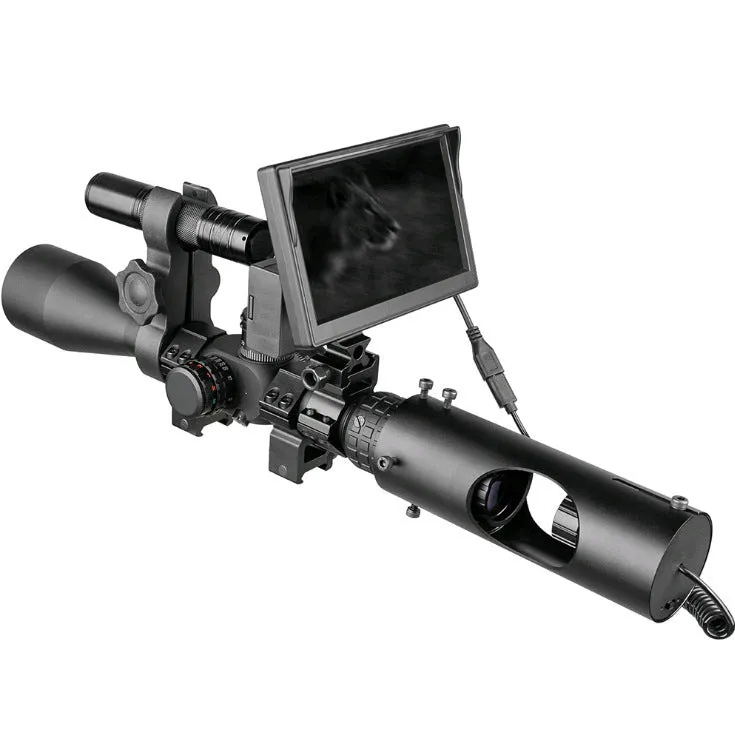
This device is suited for scenarios where enhanced night vision is required but thermal imaging is not necessary or cost-prohibitive. Its application is defined by the need to see in darkness using amplified light, supported by its own infrared illumination source. The form factor and display type suggest uses where hands-free operation or sharing the view with others might be beneficial.
Event or Professional Use
For professional or event-based applications, these goggles could assist in security patrols, wildlife observation after sunset, or monitoring of remote locations in low light. The 200-metre range allows for observation from a distance, while the independent infrared transmitter enables use in environments with absolutely no ambient light. The digital output could potentially be recorded or fed to other devices, depending on the specific model's connectivity, though this is not detailed in the source. The non-thermal imaging makes it suitable for general night vision where differentiating objects based on temperature is not the primary goal.
Everyday Home Use
For personal or home use, the goggles could serve for nighttime property checks, navigating power outages, or amateur astronomy as a tool to see faint celestial objects with enhanced electronic vision. The 5-inch screen makes the view easy to see without straining through an eyepiece, which can be more comfortable for extended casual viewing. The device provides a means to safely move around or investigate outdoor areas in complete darkness when used with its infrared illuminator.
Benefits and Buying Value
The value of this product lies in its specific approach to solving low-light visibility problems. It offers a defined set of capabilities based on digital imaging and active infrared illumination, packaged in a format that includes its own display. This provides a complete, ready-to-use system for its intended purpose.
Reuse and Low Maintenance
As a digital electronic device, its maintenance primarily involves care of the lenses and ensuring battery power for the CCD sensor, LCD, and infrared transmitter. The lack of delicate image-intensifier tubes, which can be damaged by bright light, can be a practical advantage, as digital sensors are generally more tolerant. The device is designed for repeated use in low-light conditions, with its value realised over multiple occasions where night vision is required. The construction is centred on reliable electronic operation rather than consumable parts.
Why Choose This Product
This product is chosen for its concrete specifications: a 200-metre effective viewing distance, a 5-inch LCD for direct viewing, and a separate infrared transmitter for active illumination. It represents a digital alternative to analogue night vision, potentially offering a different balance of cost, features, and usability. The choice is based on the need for a defined range of night vision capability using light amplification technology, presented in a format that includes an integrated screen. It provides a solution where seeing in near darkness up to a specified range is the core requirement.