

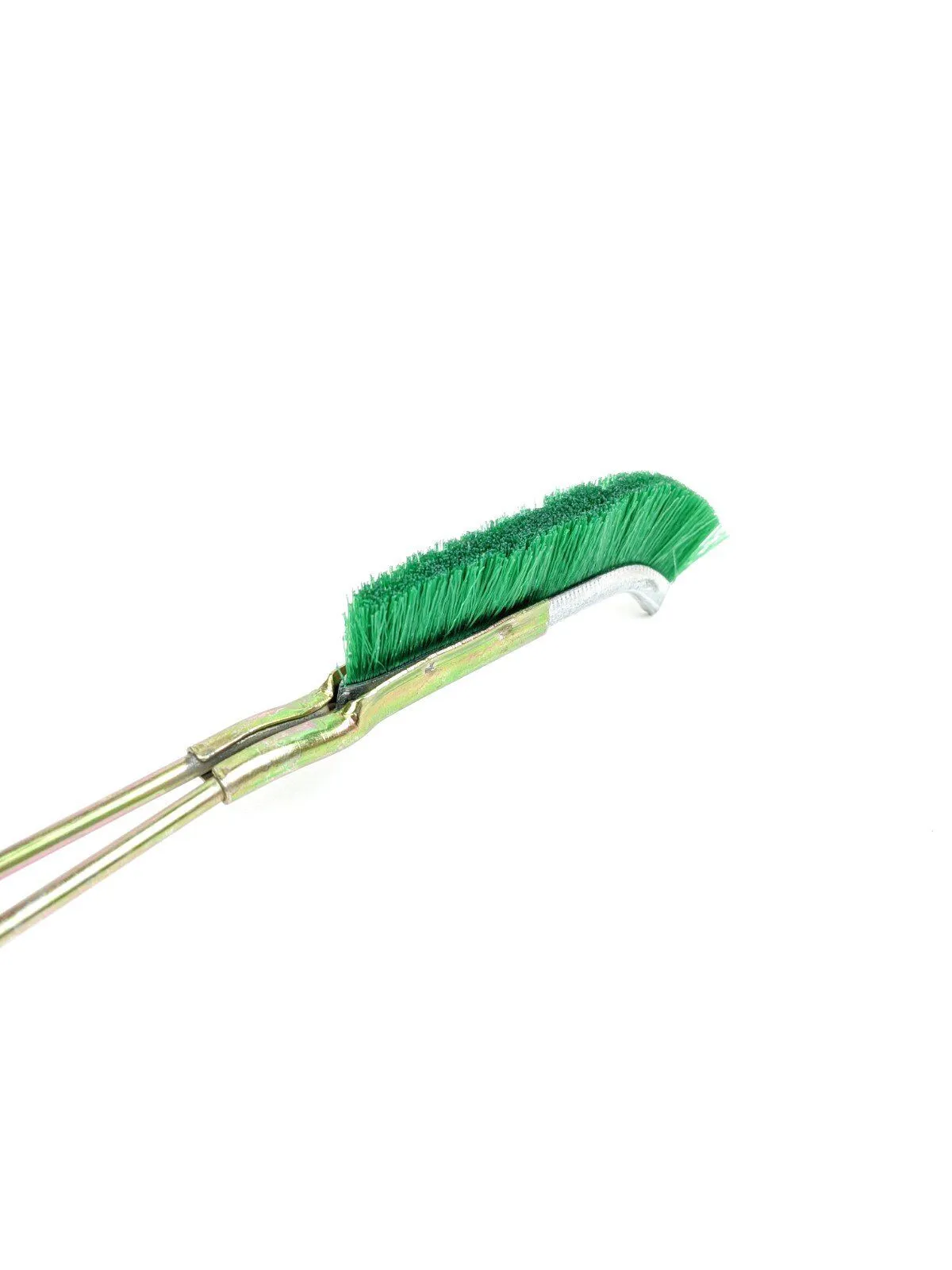
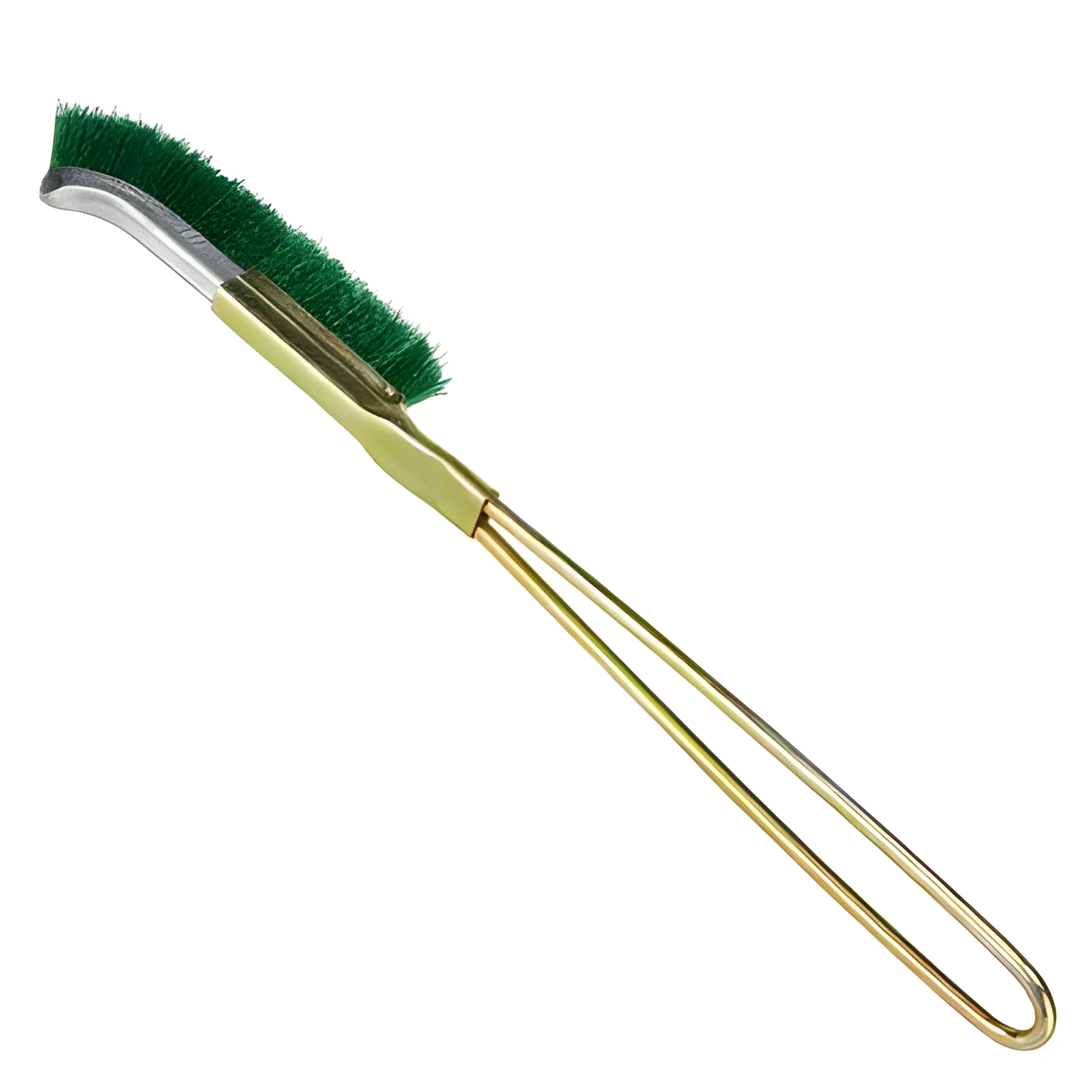
Mini iron brush for rust removal, an elbow nylon wire brush with metal handle designed for cleaning range hoods and other small metal surfaces, green colour finish, compact household cleaning tool.
Green
£20.58
Sale price
£20.58
Regular price
Skip to product information

 This compact, elbow-shaped nylon wire brush is a practical tool for targeted cleaning tasks around the home and workshop. It is specifically useful for addressing rust spots, removing baked-on grease from range hood filters and grill surfaces, and scrubbing grime from small metal fixtures. The brush's design prioritises access and effective cleaning over heavy-duty material removal, making it suitable for maintenance and light restoration work where preserving the underlying metal surface is a consideration.
 The brush is built around a simple yet functional design intended to make cleaning awkward spots more manageable. Its construction focuses on delivering effective scrubbing power while maintaining a durable and user-friendly form factor.
 This tool finds its primary application in scenarios where targeted mechanical cleaning is required. It bridges the gap between light-duty scrubbing pads and aggressive power tools, offering manual control and precision.
 Choosing this brush provides a specific set of practical advantages centred on access, controlled cleaning, and durability, derived directly from its stated materials and design.


Mini iron brush for rust removal, an elbow nylon wire brush with metal handle designed for cleaning range hoods and other small metal surfaces, green colour finish, compact household cleaning tool.
£20.58
Sale price
£20.58
Regular price
Green Elbow Nylon Wire Brush for Rust Removal and Range Hood Cleaning
Features and Construction
Material and Build
The brush head is fitted with rigid nylon wire bristles. Nylon is chosen for its ability to scrub away rust and stubborn residues without the deep scratching often associated with steel wire brushes, making it a suitable option for surfaces where you wish to avoid excessive abrasion. The handle is constructed from metal, providing a solid, non-flexing core that translates pressure effectively from your hand to the brush head and ensures the tool can withstand repeated use.Size and Practical Fit
The defining feature of this brush is its elbow, or angled, shape. This design allows the brush head to reach into corners, behind fixtures, and into other recessed areas that a straight-handled brush cannot access easily. Its compact size suggests it is intended for smaller surfaces and detailed work, such as cleaning individual range hood baffles, grill bars, or tool parts, rather than large, flat panels.Uses and Placement
Event or Professional Use
In a professional or workshop setting, this brush can be used for light surface preparation, such as removing light rust from metal before painting or degreasing small engine components. Its size makes it impractical for large-scale projects but ideal for touch-up work, cleaning tools, or maintaining equipment where detailed attention is needed.Everyday Home Use
For household cleaning, it is particularly effective on kitchen appliances. The nylon bristles can tackle the accumulated grease on range hood filters and grill grates without causing significant damage. It is also useful for cleaning outdoor furniture fittings, bicycle chains (with appropriate cleaner), and removing corrosion from garden tool blades, providing a versatile option for regular home maintenance.Benefits and Buying Value
Reuse and Low Maintenance
The metal and nylon construction is inherently resilient to water and most common cleaning chemicals, meaning the brush can be rinsed and reused many times. There are no complex parts or electrical components to fail. Simple rinsing after use and storage in a dry place are sufficient to maintain its effectiveness over an extended period, offering good long-term value for a manual tool.Why Choose This Product
You would select this elbow nylon wire brush over a standard straight brush when your cleaning tasks involve corners, edges, or recessed areas. Its value lies in its specific shape and material choice: the nylon bristles provide a scrubbing action that is tough on grime but considered safer for the underlying surface than metal wire, while the angled head solves a common access problem in cleaning. It is a focused tool for a defined set of problems, not a general-purpose scrubber.