

4G all netcom wireless router with dual mode operation, 300mbps firewall protection and four antenna signal boost in blue colour for strong mobile broadband or wired internet connectivity across EU and US regions.


4G all netcom wireless router with dual mode operation, 300mbps firewall protection and four antenna signal boost in blue colour for strong mobile broadband or wired internet connectivity across EU and US regions.
4G Dual Mode Router with Four Antenna Signal Boost for EU and US Regions
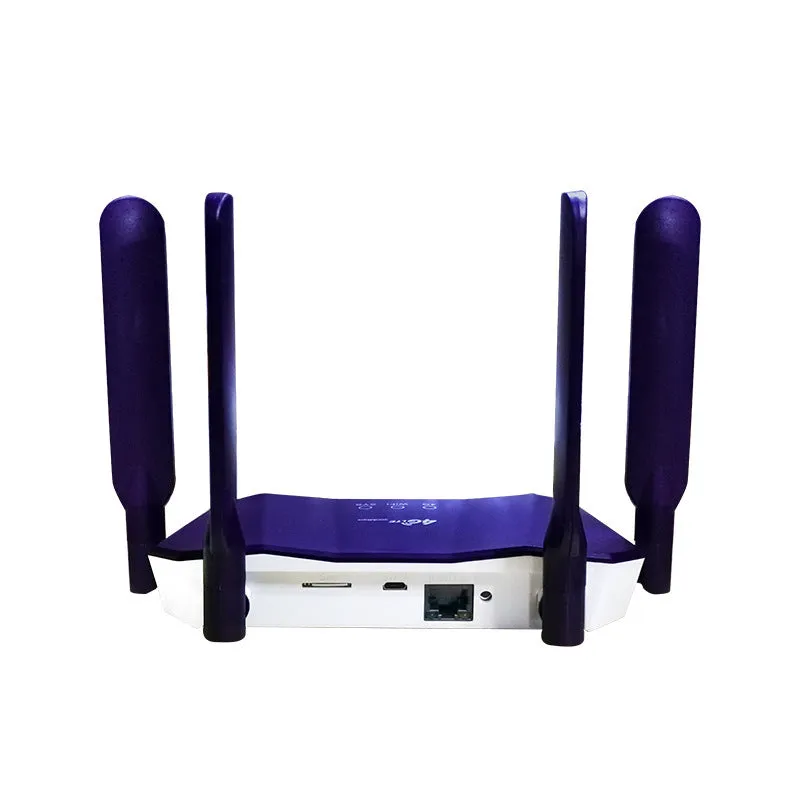
This versatile networking device bridges the gap between mobile and fixed-line internet, providing a practical solution for areas with unreliable broadband or for users requiring flexible connectivity. By supporting both 4G SIM card operation and traditional wired Ethernet input, it functions as either a primary mobile broadband hub or a secondary WiFi access point. The inclusion of four external antennas aims to strengthen wireless signal reception and transmission, while the 300mbps firewall offers a foundational layer of network security. Available in distinct EU and US model variants, the router accommodates different regional electrical standards and mobile frequency bands.
Features and Construction
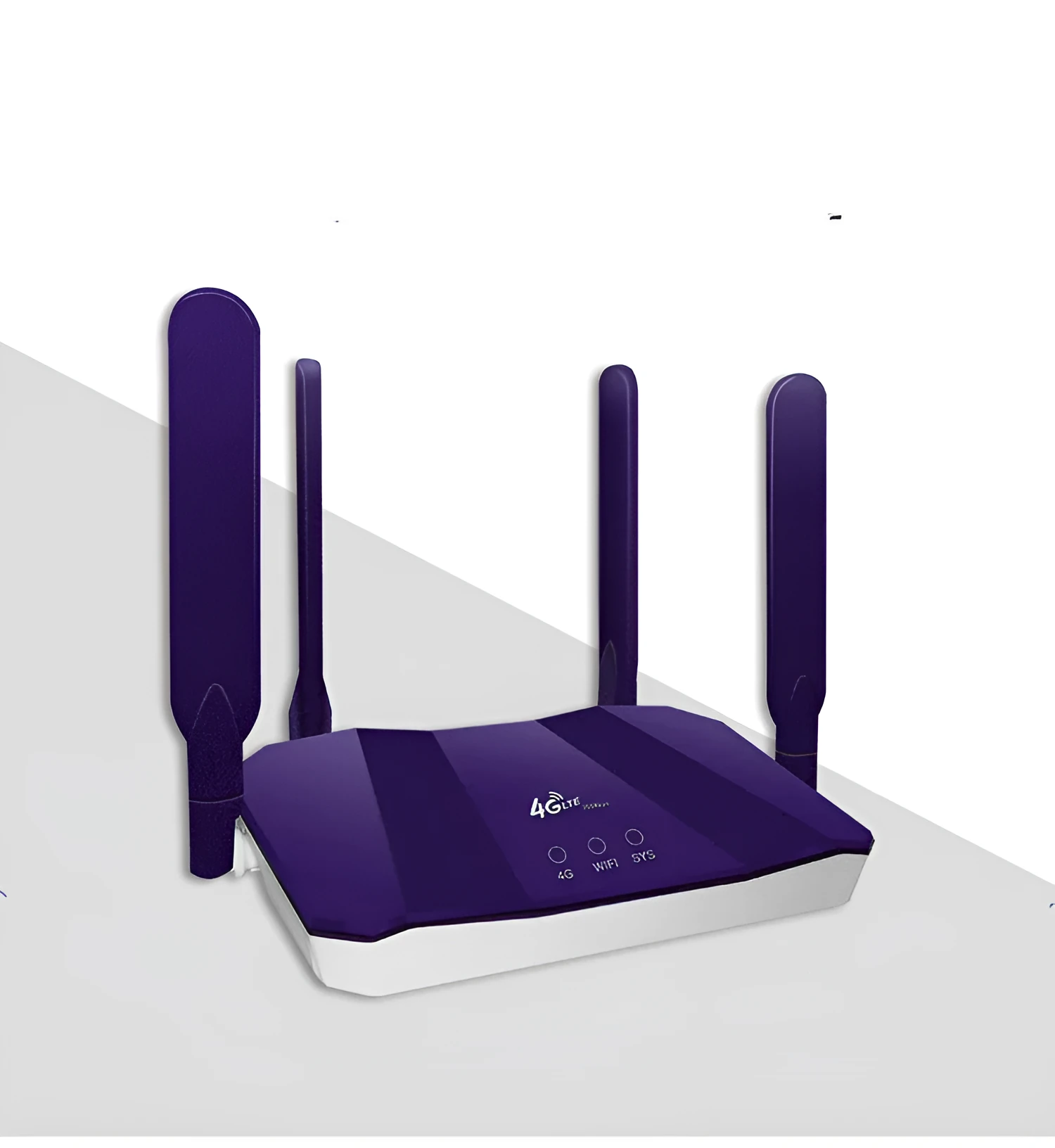
The router's core functionality centres on its dual-mode capability and signal-enhancing design. Its physical construction prioritises practical operation with clear connectivity options.
Material and Build
The unit utilises a plastic exterior housing that encases the internal networking components. Four detachable or fixed antenna elements made from metal extend from the chassis to improve wireless performance. The blue colour finish provides consistent visual identification across the product range.
Size and Practical Fit
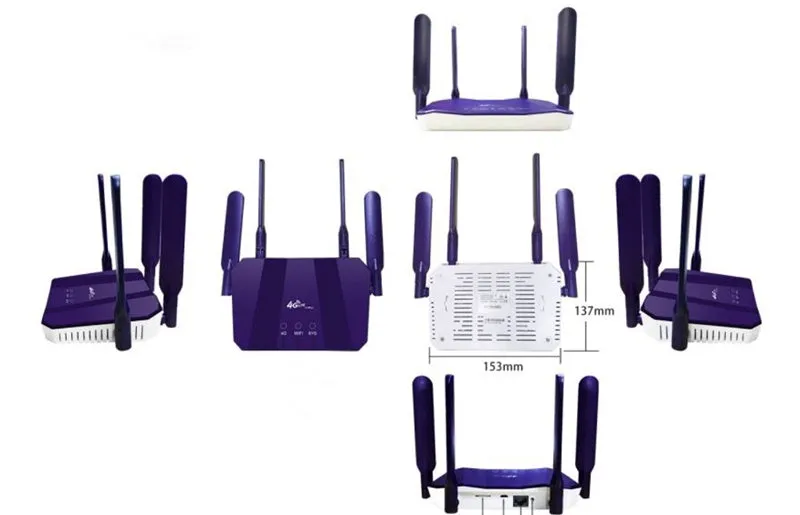
With dimensions of 153mm in length, 137mm in width, and a slim 21mm profile, the router maintains a compact footprint suitable for placement on shelves, desks, or other flat surfaces. Its 400g weight contributes to stable positioning without being overly heavy. The regional model selection (EU or US) ensures compatibility with local power supplies and mobile network frequencies, which is a critical consideration for reliable operation.
Uses and Placement

This router addresses specific connectivity scenarios where traditional internet access is either unavailable or needs supplementation. Its design supports both temporary and permanent installation setups.
Event or Professional Use
For event organisers, tradeshow exhibitors, or temporary office setups, the 4G capability provides instant internet access without relying on venue WiFi or wired infrastructure. The plug-and-play nature allows for rapid deployment. Professionals working in construction, agriculture, or remote monitoring can use it to establish a local network where fixed-line services are absent, leveraging the four antennas to maintain connection stability across a worksite.
Everyday Home Use
In residential settings, it serves as a backup internet solution during broadband outages by switching to 4G mode. Households in areas with poor fixed-line coverage may use it as their primary router. Its wired mode also functions as a standard WiFi router, distributing a connection from an existing cable or DSL modem. The firewall helps protect personal devices on the home network from basic external threats.
Benefits and Buying Value
The router's value stems from its operational flexibility and focused feature set, avoiding unnecessary complexity while covering essential connectivity needs.
Reuse and Low Maintenance
The device can be repurposed across different locations and scenarios—from a home office to a holiday rental—simply by changing the SIM card or internet source. No specialist maintenance is required beyond occasional dusting and ensuring firmware updates are applied if available. Its regional variants (EU/US) mean it remains usable if the user relocates between these territories, provided the correct model is selected initially.
Why Choose This Product
This router is suited for users who require a straightforward, dual-purpose internet solution without advanced managed network features. The four-antenna configuration is a tangible differentiator from basic two-antenna models, potentially offering better coverage in challenging environments. Choosing between the EU or US model at point of purchase ensures technical compatibility, which is more reliable than attempting to use a single generic device across incompatible regions.

