

ESP8266 WiFi development board with Arduino IDE compatibility, 11 I/O pins, OTA wireless upload, and onboard 5V 1A switching power supply for IoT and microcontroller projects in black


ESP8266 WiFi development board with Arduino IDE compatibility, 11 I/O pins, OTA wireless upload, and onboard 5V 1A switching power supply for IoT and microcontroller projects in black
ESP8266 WiFi Development Board: Arduino-Compatible Board with OTA Updates and Onboard Power
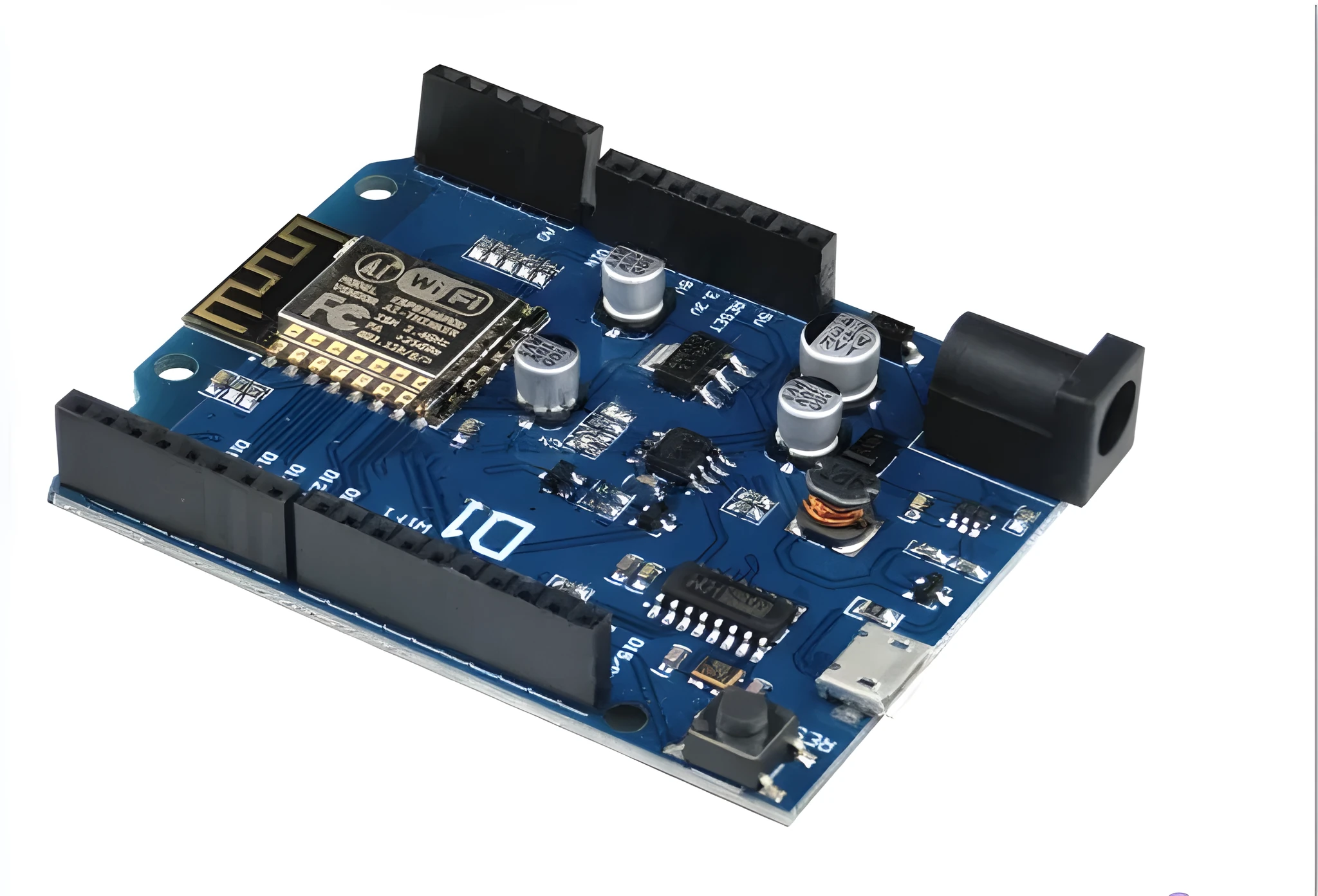
This WiFi development board, centred on the ESP-8266EX chipset, provides a direct route into Internet of Things (IoT) and connected device projects for users familiar with the Arduino ecosystem. After a one-time installation of the necessary hardware package, it integrates seamlessly with the Arduino IDE, functioning in a manner comparable to an Arduino UNO. This compatibility reduces the learning curve for adding wireless capability to prototypes and custom electronics. The board's onboard 5V 1A switching power supply, accepting a wide input voltage up to 24V, further simplifies development by powering sensors and peripherals directly. Support for Over-The-Air (OTA) wireless firmware uploads adds a layer of convenience for updating deployed devices without physical connection.
Features and Construction

The board's design prioritises practical functionality for electronics development, combining wireless communication, programmable I/O, and integrated power management into a single unit.
Material and Build
Constructed around a standard printed circuit board (PCB) populated with electronic components, the core of the board is the ESP-8266EX wireless microcontroller. This chipset handles the 802.11 b/g/n WiFi protocols, enabling the board to connect to local networks. The board is finished in a black colour, providing a neutral appearance suitable for various project enclosures. The build includes the necessary circuitry for the switching power supply and pin headers for easy connection to external components.
Size and Practical Fit
While exact physical dimensions are not specified, the board's layout with 11 I/O pins and one ADC pin suggests a compact footprint designed for prototyping breadboards or integration into custom cases. The pin configuration provides a useful range of digital control lines and a single analogue input channel, sufficient for many sensor-based applications. The inclusion of the power supply on the board itself saves space in a project enclosure that would otherwise be needed for a separate regulator module.
Uses and Placement
This board is suited for a range of applications from hobbyist experiments to functional prototypes, bridging the gap between simple microcontroller projects and network-connected devices.
Event or Professional Use
For professional prototyping or educational workshops, the board's Arduino IDE compatibility is a significant advantage. It allows engineers, students, or makers to rapidly test WiFi-enabled concepts—such as remote data logging, smart home sensors, or basic IoT controls—using a familiar programming environment. The OTA update capability is particularly useful for maintaining and improving firmware on devices that are difficult to physically access after installation.
Everyday Home Use
Makers and hobbyists can utilise this board to create custom smart home devices, like wireless temperature monitors, connected light controllers, or simple web servers for home automation. The integrated 5V power supply means many common sensors and actuators can be powered directly from the board, reducing component count and wiring complexity in a final build. It serves as a core component for DIY projects that require internet connectivity without the overhead of a full single-board computer.
Benefits and Buying Value
The board offers tangible practical benefits centred on reducing development friction and providing integrated functionality often found in separate modules.
Reuse and Low Maintenance
The board is designed for repeated use across different projects. Its robust pin header connections allow it to be transplanted from one prototype to another. The OTA wireless update feature minimises maintenance effort for deployed devices, as firmware fixes or enhancements can be pushed remotely. The availability of online documentation aids long-term usability by providing a persistent reference for pinouts and setup procedures.
Why Choose This Product
This development board presents a consolidated solution by combining the ESP8266's WiFi, sufficient I/O for many tasks, and a capable power supply on one board. Choosing it over separate components reduces wiring, potential points of failure, and overall project clutter. Its primary value lies in this integration and its straightforward alignment with the widely-used Arduino toolchain, making wireless development more accessible to a broad audience of makers and developers.